
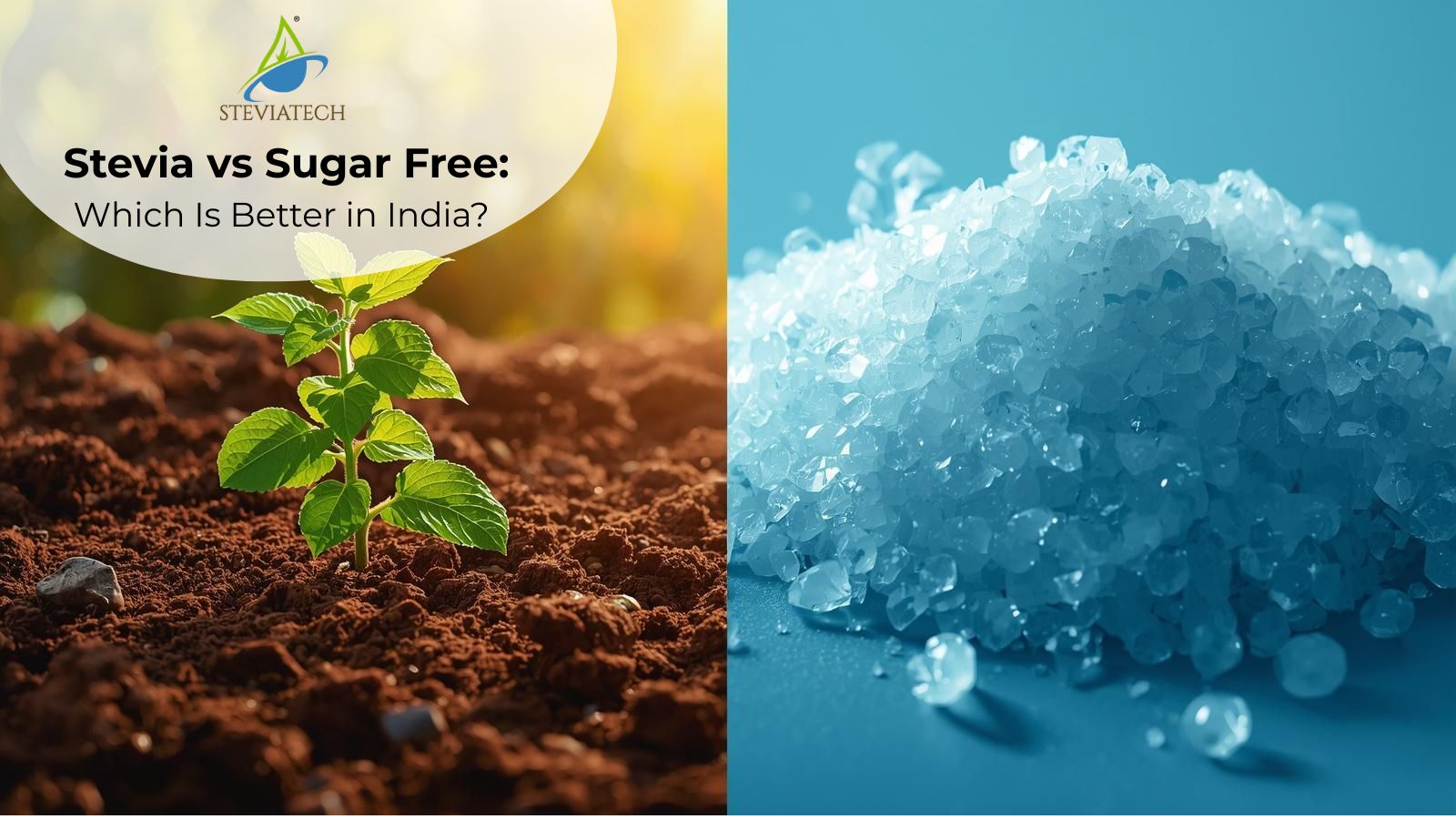
The Indian consumer today reads labels more carefully than ever. As awareness of diabetes and obesity grows, the debate around stevia vs sugar free has intensified. While both claim to offer sweetness without calories, they are not identical.
So, is stevia better than sugar free? And how does the comparison between natural sweetener vs sugar free options influence the future of zero calorie sweeteners India?
This blog examines health impact, regulatory standing, consumer perception, and industry adoption to clarify the difference.
What Does “Sugar Free” Typically Contain?
In India, products marketed as sugar free often contain artificial sweeteners such as:
• Aspartame
• Sucralose
• Saccharin
• Acesulfame-K
These are synthetic zero calorie sweeteners India recognizes under FSSAI regulations. Stevia, in contrast, is a plant-derived natural sweetener extracted from Stevia rebaudiana leaves.
This distinction is central to the stevia vs artificial sweeteners comparison.
Stevia vs Sugar Free: Key Differences
Source and Label Appeal
In the stevia vs sugar free debate, source matters. Stevia is plant-derived, aligning with clean-label and natural positioning. Sugar free alternatives are typically lab-developed synthetic compounds.
Metabolic Response
Both provide sweetness without calories. However, stevia does not raise blood glucose levels, making it widely considered one of the best sugar substitutes for diabetics. Artificial sweeteners also do not raise blood glucose but often face greater consumer skepticism.
Consumer Trust in India
Urban Indian consumers increasingly prefer natural sweetener vs sugar free chemical alternatives. Market surveys indicate growing comfort with plant-based ingredients over synthetic additives.
Zero Calorie Sweeteners India: Market Growth
India’s zero calorie sweeteners market is expanding at approximately 7–9% CAGR. Drivers include:
• Rising diabetic population
• Government sugar reduction initiatives
• Reformulation by beverage and dairy companies
• Increased awareness of metabolic health
Within this growth, stevia adoption is accelerating due to its natural origin and clean-label positioning.
Is Stevia the Best Sugar Substitute for Diabetics?
For diabetic consumers, sweetness without glucose spikes is critical. Stevia offers:
• Zero glycemic impact
• No caloric contribution
• Compatibility with low-carb and keto diets
• FSSAI approval under INS 960
These factors position stevia as one of the best sugar substitutes for diabetics in India.
Addressing Common Myths
Myth: All sugar free sweeteners are the same.
Reality: The difference between natural sweetener vs sugar free synthetic compounds is significant in source and perception.
Myth: Stevia tastes bitter.
Reality: High-purity steviol glycosides such as Reb M significantly improve taste profiles.
Myth: Artificial sweeteners are unsafe.
Reality: They are approved within limits, but consumer perception increasingly favors plant-based options.
Stevia vs Artificial Sweeteners: B2B Implications
For food and beverage brands, the stevia vs artificial sweeteners decision extends beyond calories. It includes:
• Clean-label positioning
• Long-term brand equity
• Export market compliance
• Sustainability narratives
As global demand for natural ingredients rises, manufacturers are transitioning from synthetic sugar free options to stevia-based systems.
Is Stevia Better Than Sugar Free?
From a health perspective, both are zero-calorie. From a positioning perspective, stevia provides:
• Natural origin
• Strong diabetic suitability
• Clean-label alignment
• Growing consumer trust in India
• Global regulatory acceptance
In the evolving stevia vs sugar free conversation, stevia increasingly represents the future of sweetening in India.
As consumer expectations shift toward transparency and natural ingredients, plant-based sweeteners are becoming central to reformulation strategies.
To explore stevia solutions for your formulations or to partner in India’s natural sweetener value chain, visit www.steviatech.com and connect with Steviatech’s experts today.